Introducing AI Agents
Before We Get Started
- How many have used ChatGPT/Claude?
- How many have built their own chatbot and/or used the OpenAI/Claude APIs?
- How many have created something beyond this?
Chatbots are not that Smart
There are many limitations…
- Needs constant human input every turn; No ability to plan beyond a single interaction
- Single model with single context
- No interaction with external systems
Introducing AI Agents!
What is an Agent?
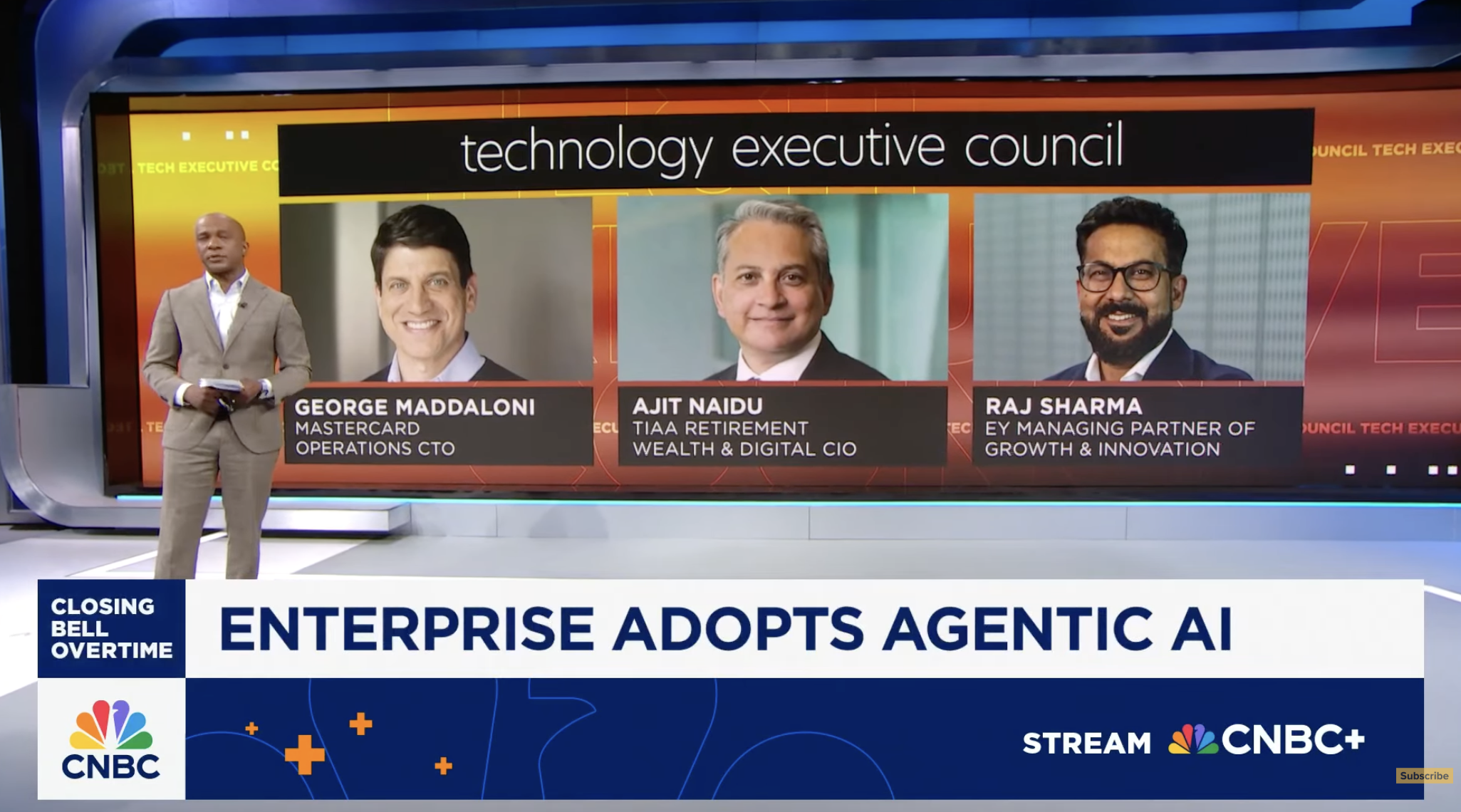
Source: https://www.youtube.com/watch?v=bwXaJXgezf4
What is an Agent?
Source: https://www.weforum.org/stories/2025/06/cognitive-enterprise-agentic-business-revolution/
What is an Agent?
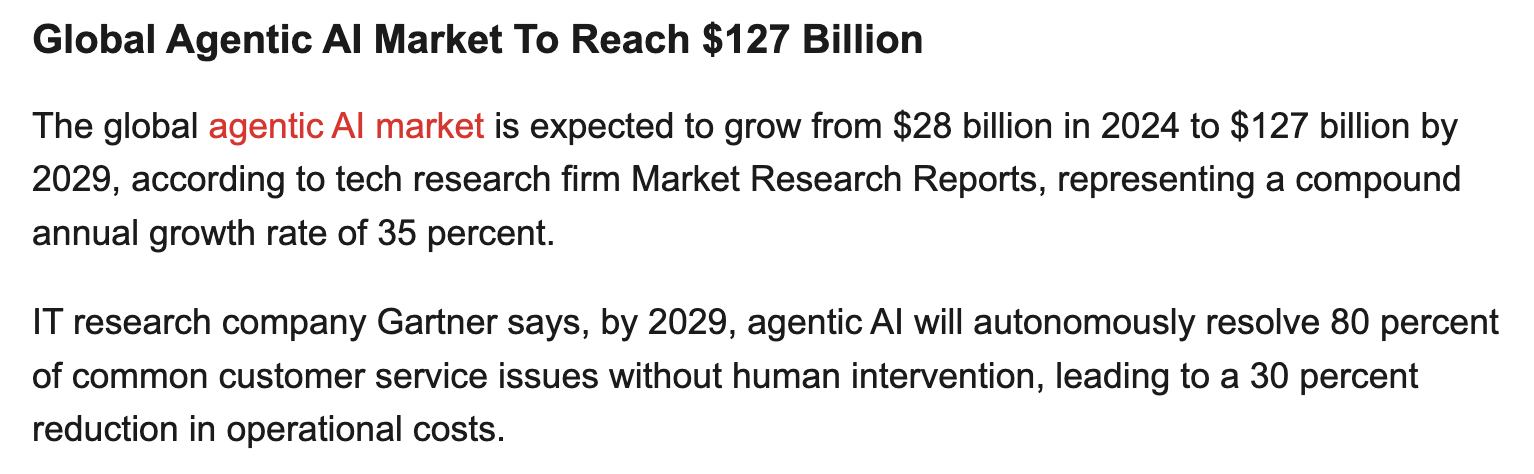
Source: https://www.crn.com/news/ai/2025/10-hottest-agentic-ai-tools-and-agents-of-2025-so-far
What is an Agent?
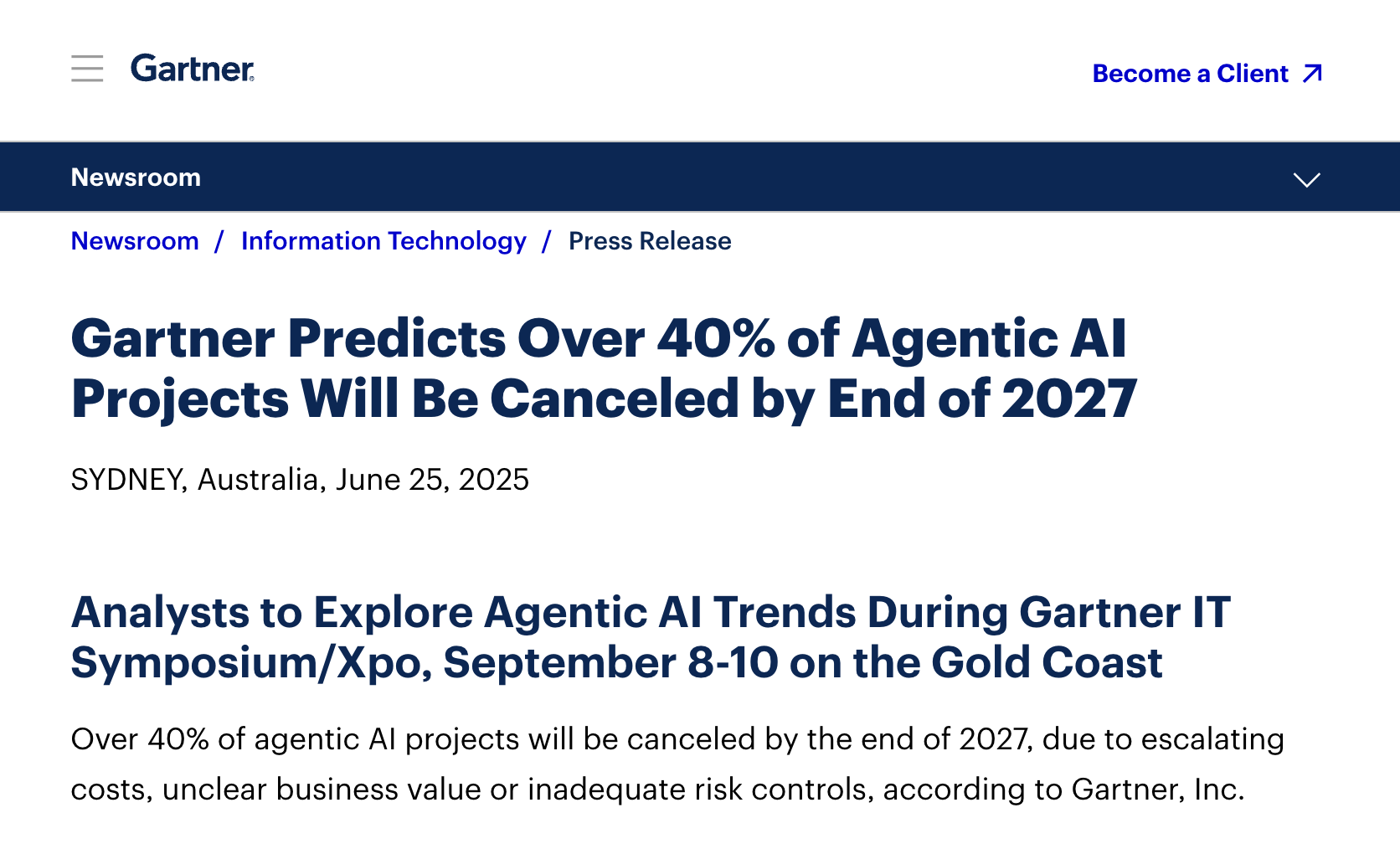
Source: https://www.gartner.com/en/newsroom/press-releases/2025-06-25-gartner-predicts-over-40-percent-of-agentic-ai-projects-will-be-canceled-by-end-of-2027
What is an Agent?
Imagine a DigiPen Campus Assistant: An agent that can help you navigate anything and everything at DigiPen!
- “Where can I find the ‘Hopper’ room?”
- “Can you tell me more about FLM201?”
- “Oh, and what’s today’s vegetarian option at the Bytes Cafe?”
Five Characteristics of Agents
- Agents are Planners
- Agents are driven by goals
- And they can put together a plan for the steps to complete that goal.
- “First, I will discover where course information is located”
- “Then I will search for any courses that reference FLM201”
- “Then I summarize all of the key points for the student”
Five Characteristics of Agents
- Agents are Autonomous
- Agents can then go off and execute the plan, independent of human input
- The concept of “human in the loop” still applies for confirmation
- e.g. “Do you really want to place this order at the Bytes Cafe?”
Five Characteristics of Agents
- Agents are Reactive
- Agents can change mid-course depending on what they find and/or the environment.
- e.g. “I couldn’t find any course information on FLM201. I’m going to whether there are other 200-level FLM courses before responding to the student.”
Five Characteristics of Agents
- Agents have Persistence
- Agents often have memory systems beyond the current conversation
- Broadly classified as short and long term memory
- Short term memory could be the options at the Bytes Cafe
- Long term memory could be your food preferences
Five Characteristics of Agents
- Agents are Interactive
- Agents can delegate to other agents for complex tasks
- (Or for tasks where other agents are better suited for.)
- e.g., Campus Agent -> delegating to a Course Agent
- Agents can also be given access to external tools
- e.g., File search, Web search, access to the Bytes Cafe API
Let’s Try This!
Let’s Try This!
Let’s Try This!

Observations and Questions
Get into groups of 2 or 3
- Q: What worked? What surprised you?
- Q: What didn’t work? Where did the agent fail?
- Q: What other examples of agents can you think of?
Other Examples for Agents
- Customer service agent
- Travel booking agent
- Research assistant
- Code generation agent (very popular right now)
- Agents within games
- Traditional NPCs are pre-written dialogue trees
- Whereas agents can be more independent within the game environment
How Does Our Campus Assistant Work?
Gradio-Based UI
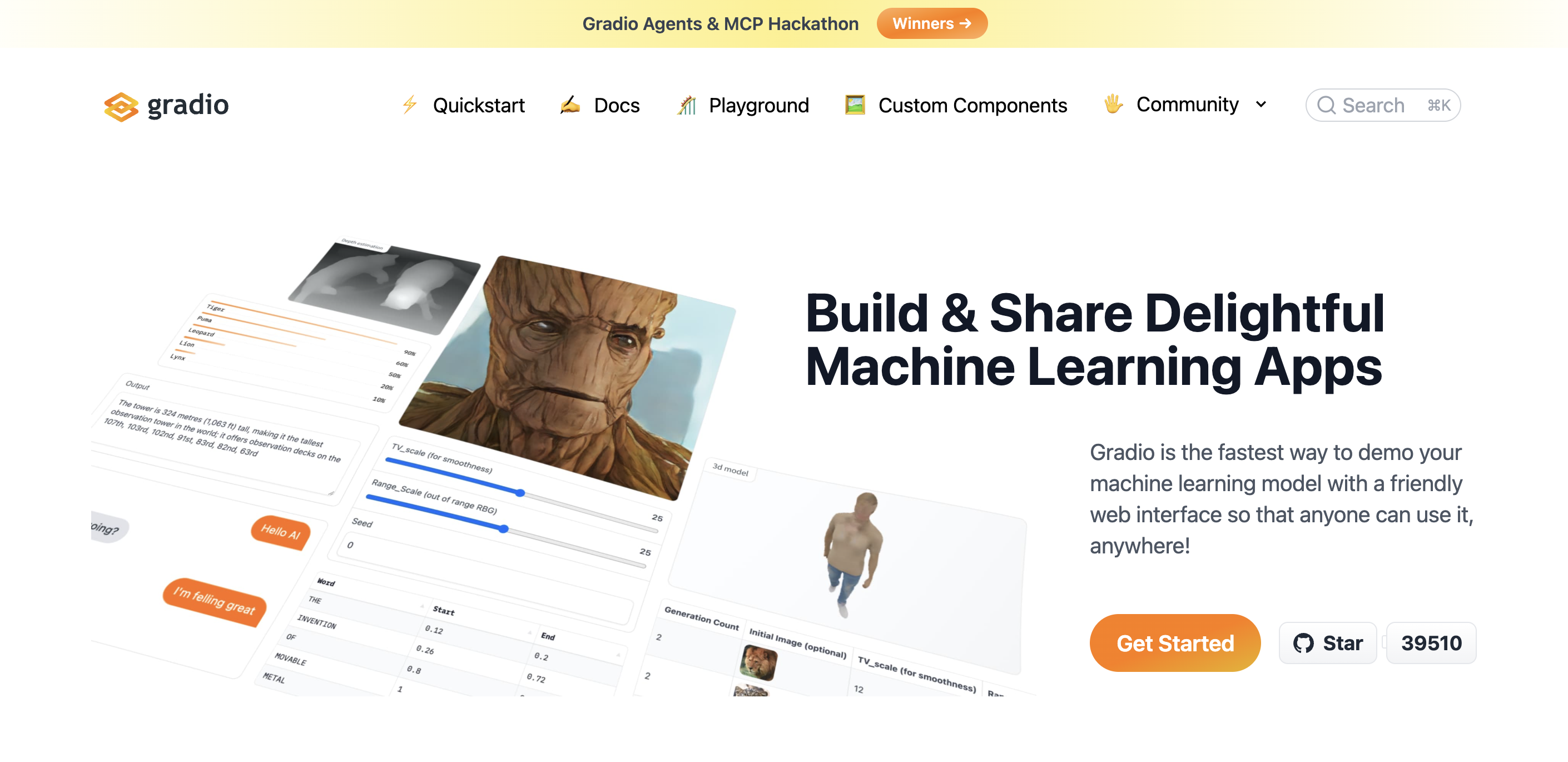
Source: https://www.gradio.app/
Gradio-Based UI
import time
import gradio as gr

def slow_echo(message, history):
    for i in range(len(message)):
        time.sleep(0.05)
        yield "You typed: " + message[: i + 1]

demo = gr.ChatInterface(
    slow_echo,
    flagging_mode="manual",
    flagging_options=["Like", "Spam", "Inappropriate", "Other"],
    save_history=True,
)

if __name__ == "__main__":
    demo.launch()
Gradio-Based UI
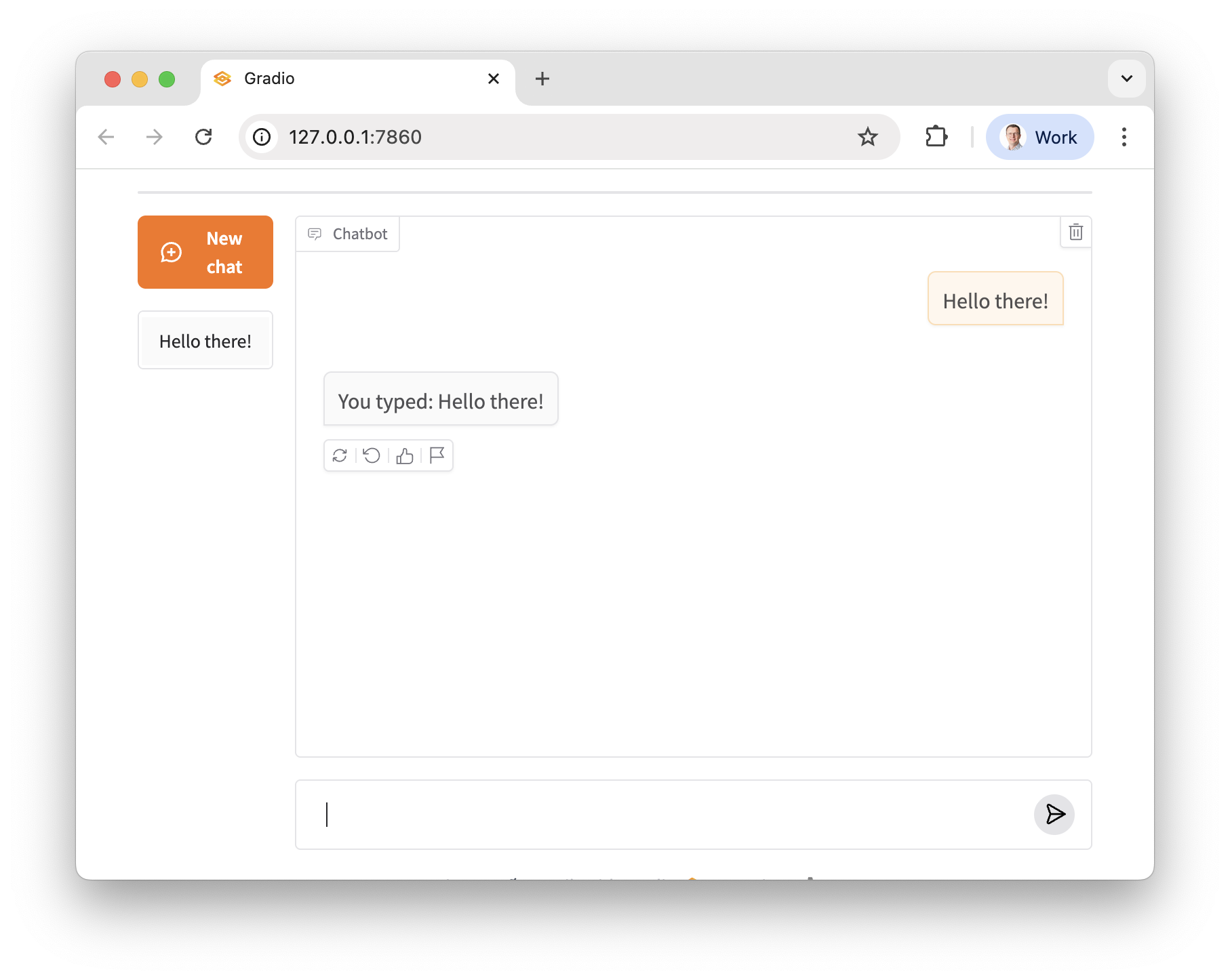
Source: https://gradio.app
Hosted on Hugging Face Spaces
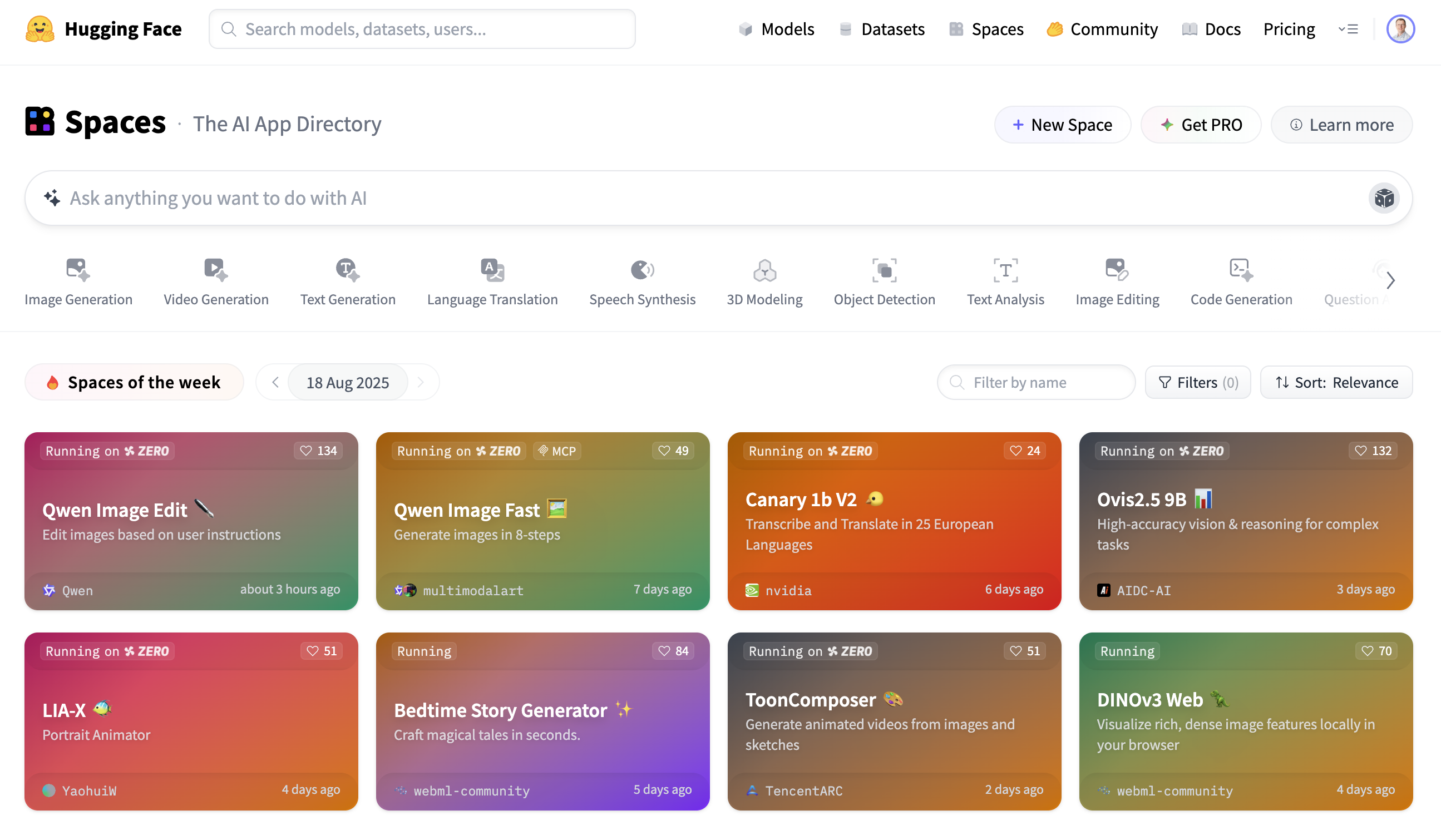
Source: https://huggingface.co/spaces
Creating the Agents
Agent Structure
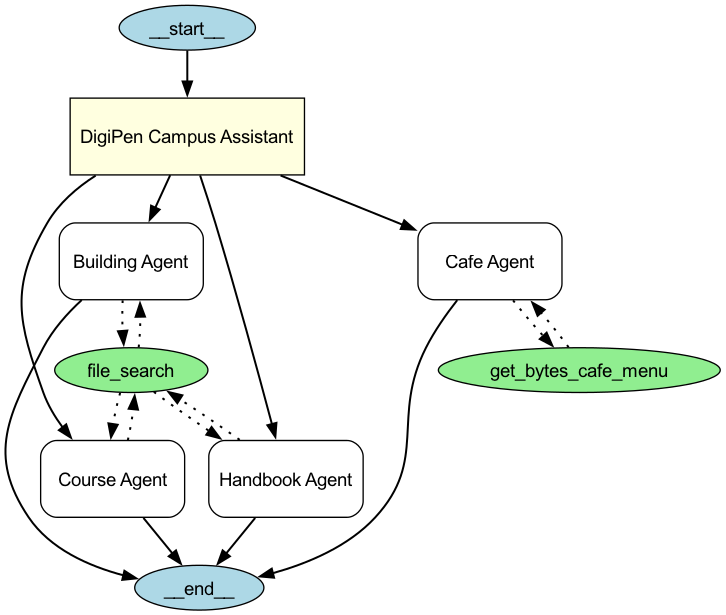
Agents and tools for the DigiPen Campus Assistant
So Many Agent Frameworks…
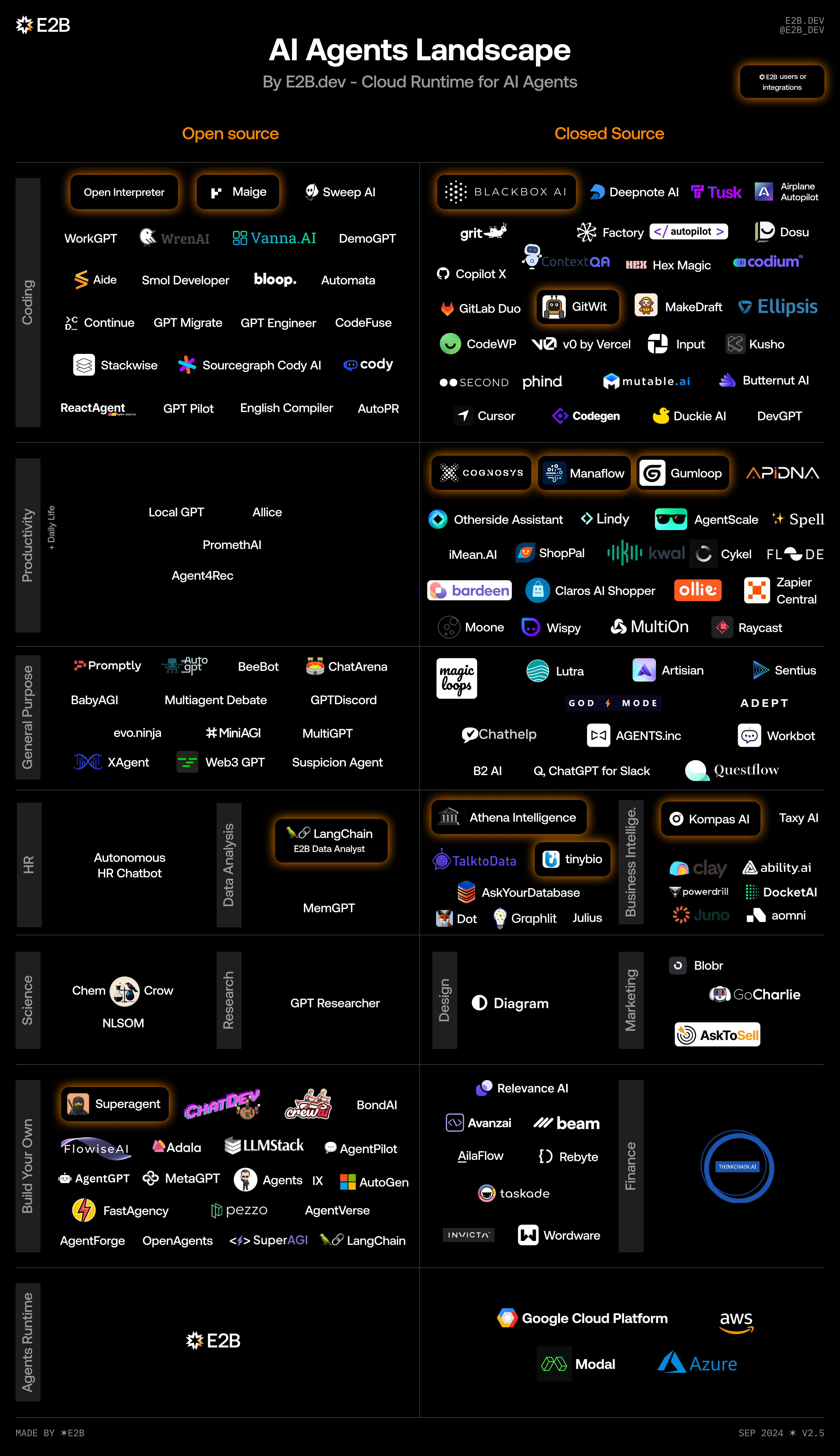
Source: https://e2b.dev
OpenAI Agents SDK
- Used for our demo
- https://openai.github.io/openai-agents-python/
- Python and JavaScript/TypeScript
- MIT License
- Works with models that support OpenAI’s Responses API
LangGraph
- https://langchain-ai.github.io/langgraph/
- Python only
- MIT License
Crew.ai
- https://github.com/crewaiinc/crewai
- Python only
- MIT License
Microsoft
- AutoGen
- https://microsoft.github.io/autogen/stable/
- Python (.NET coming soon)
- MIT License
- Microsoft Semantic Kernel
- https://github.com/microsoft/semantic-kernel
- Python, .NET, Java
- MIT License
What Should You Be Considering?
- Question: If most agents run in the browser, why are many of the agent frameworks written in Python? 🤔
What Should You Be Considering?
- Where will your agent run?
- Server or client? On the web? In game?
- This will likely determine the language
- How will you manage API keys?
- Support
- Will this agent framework be around in 3-5 years?
- Is there a cost/hosting component to it?
- Easy vs. Simple
- Is your choice “easy” or “simple”?
Sidebar: Easy vs. Simple
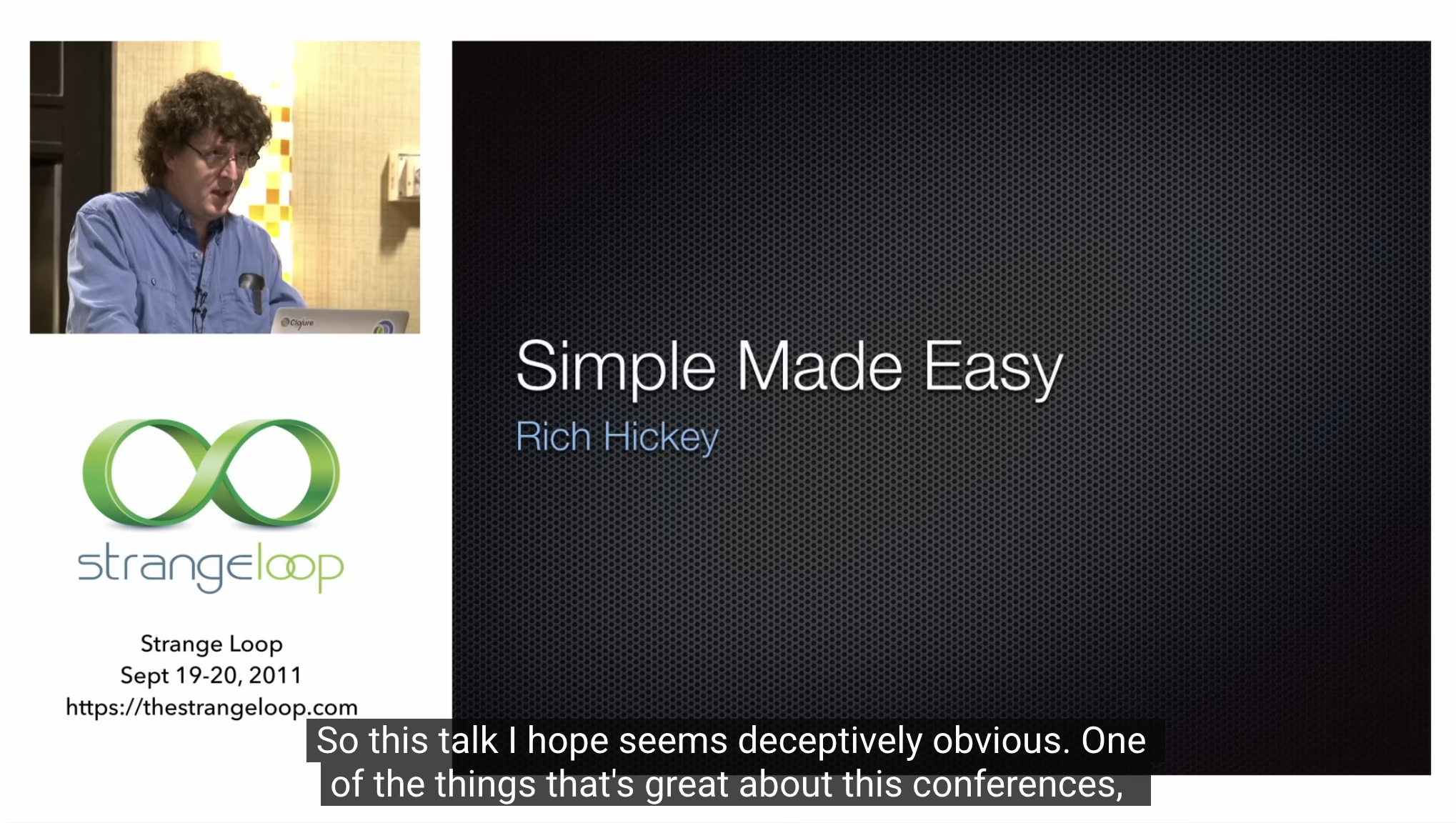
https://www.youtube.com/watch?v=SxdOUGdseq4
OpenAI Agents SDK (Python)
Creating and running a new agent
from agents import Agent, Runner

agent = Agent(
    name="DigiPen Campus Assistant",
    instructions="You are a helpful campus assistant that can plan and execute tasks for students at DigiPen. Please be concise and accurate in handing off tasks to other agents as needed.",
    handoffs=[building_agent, course_agent, handbook_agent, cafe_agent],
)

messages.append({"role": "user", "content": user_msg})
result = Runner.run_streamed(agent, messages)
Multiple Agents
OpenAI Agents SDK (Python)
Specifying handoffs
from agents import Agent, Runner

agent = Agent(
    name="DigiPen Campus Assistant",
    instructions="You are a helpful campus assistant that can plan and execute tasks for students at DigiPen. Please be concise and accurate in handing off tasks to other agents as needed.",
    handoffs=[building_agent, course_agent, handbook_agent, cafe_agent],
)

messages.append({"role": "user", "content": user_msg})
result = Runner.run_streamed(agent, messages)
Why Multiple Agents?
- Context window limitations
- Each agent can have a different system prompt (instructions)
- Each agent can have a different underlying model
- Specialized models (e.g., a vision encoder)
- Or to blend cost
- Makes tool separation cleaner and more accurate
Example of Multiple Agents
- Code generation
- Agents for ‘architect’, code writer, tester, debugger, etc.
- Content generation
- Agent to create content, other agents to generate images, translate content, etc.
- Travel booking
- Agent to book flights, hotels, cars, etc. for packages
Patterns for Agents
- As you get deeper into building agents, patterns start to emerge
- e.g., router (which is what we used in our demo), orchestrator (using other agents as tools), parallel agents
Patterns for Agents
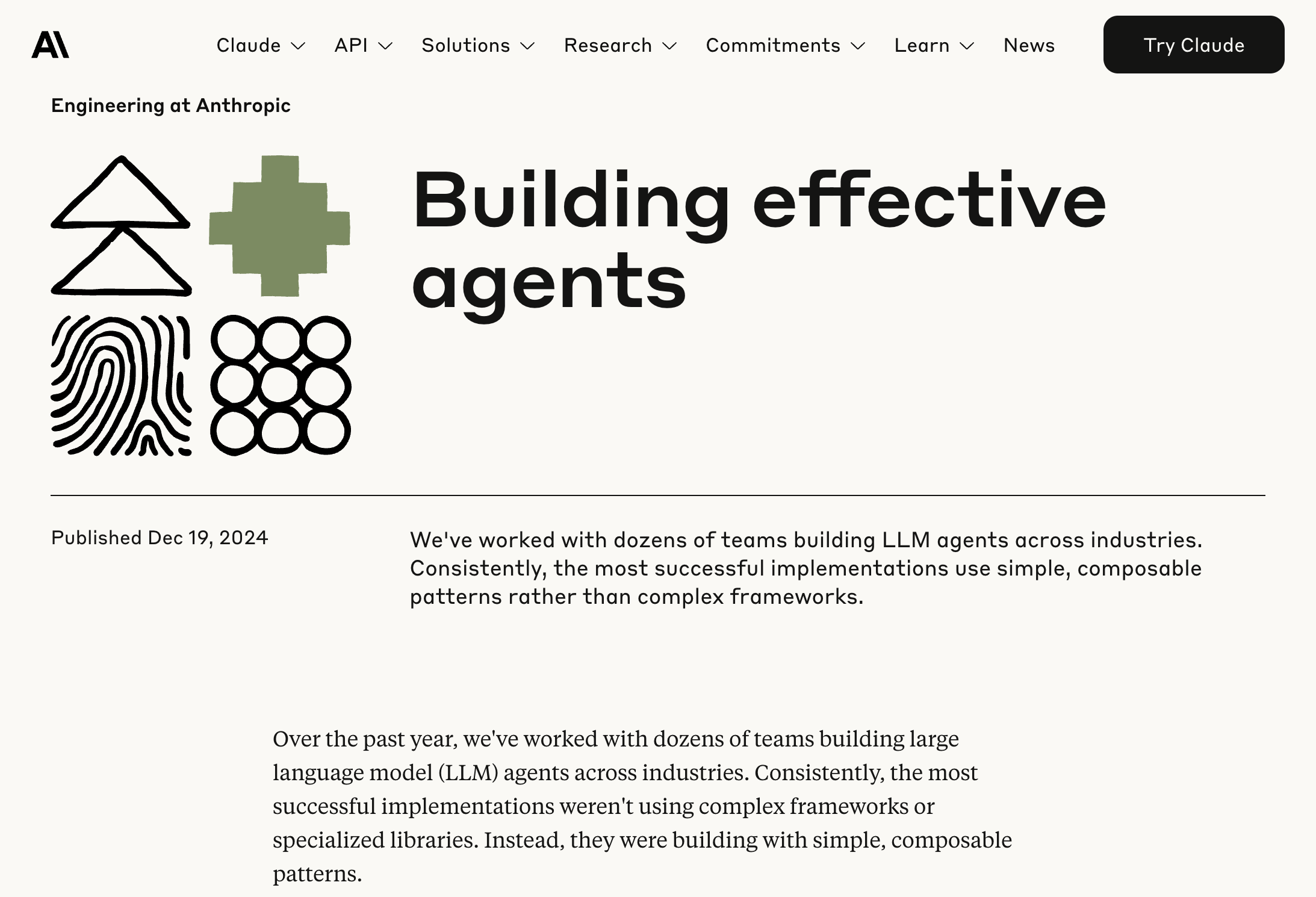
Source: https://www.anthropic.com/engineering/building-effective-agents
Giving Agents Access to Tools
Why Do Agents Need Tools?
- The scope of the agents ability is contained within the model
- Tools enable the agent to reach out to systems beyond the model
- Examples
- Read a file from disk or search the web (built in)
- Calculator (because LLMs aren’t great at math)
- Code interpreter (running code on the fly)
- What potential tools can you think of? 🤔
OpenAI Tool Calling
- Introduced by OpenAI in June 2023
- Originally called Function Calling
- Models are fine-tuned to return a structured function_call JSON object, specifying which function to call and with what arguments.
- Tools are provided as functions
- Option for the LLM to decide when to call the tool (always, never, auto)
OpenAI Tool Calling
from agents import Agent, function_tool

@function_tool
def get_bytes_cafe_menu(date: str) -> any:
    """Returns the menu for the Bytes Cafe for the date provided."""
    return { f"{date}": {
            "daily byte": {
                "name": "Steak Quesadilla", "price": 12, "description": "Flank steak, mixed cheese in a flour tortilla served with air fried potatoes, sour cream and salsa",
            },
        } }

cafe_agent = Agent(
    name="Cafe Agent",
    instructions="You help students locate and provide information about the Bytes Cafe.",
    tools=[
        get_bytes_cafe_menu,
    ])
OpenAI Tool Calling
from agents import Agent, FileSearchTool

VECTOR_STORE_ID = "vs_6896d8c959008191981d645850b42313"

building_agent = Agent(
    name="Building Agent",
    instructions="You help students locate and provide information about buildings and rooms on campus. Be descriptive when giving locations.",
    tools=[
        FileSearchTool(
            max_num_results=3,
            vector_store_ids=[VECTOR_STORE_ID],
            include_search_results=True,
        )
    ],
)
MCP (Model Context Protocol)
- OpenAI’s tool/function calling works if you have local access to the tools
- But how about external systems?
- e.g., Access to calendar, other systems, hardware, etc.
- You could build local tools to call APIs
- MCP: Model Context Protocol
- Standardized tooling interface, released by Anthropic in March 2024
- More details: https://modelcontextprototcol.io
What Next?
Using an Agent for Your Project
- Could your project benefit from agents?
- One or more agents?
- How would agents interact with the user?
- What might be some of the challenges to overcome?
Resources (1/2)
- This slide deck, resources, links, everything:
- [https://simonguest.github.io/CSP(https://simonguest.github.io/CSP){.external target=“_blank”}
Resources (2/2)
- Campus agent code:
- https://github.com/simonguest/CSP/tree/main/demos/00/campus-agent
- Clone the repo, get it running locally
- Modify by adding a new agent to it
- Create your own use case/agent in the Gradio interface
Q&A