timeline
    June 2017 : Google researchers publish "Attention is all you need" paper [1]
              : Introduces self-attention mechanism and transformer architecture
              : Eliminates the need for recurrent neural networks in sequence processing

    June 2018 : OpenAI releases GPT-1
              : 117M parameters
              : Demonstrates pre-training on large text corpora followed by fine-tuning works effectively

    Feb 2019 : OpenAI releases GPT-2
             : 1.5B parameters
             : Initially withheld full model due to concerns about misuse
             : Demonstrates impressive text generation capabilities with minimal fine-tuning

    May 2020 : OpenAI releases GPT-3
             : 175B parameters
             : Demonstrates strong few-shot learning capabilities
             : Marks a significant leap in model capabilities and scale

    June 2020 : GPT-3 available through OpenAI API
              : Still a completion model, not instruction-tuned
Exploring Generative AI Models: Part 1
Simon Guest
Recap of Last Week’s Lecture
- Introduced AI Agents, their uses, how to create them
- About 50% had used an API to call AI Model
- One or two beyond this
This Week
- Two Part Lecture on AI Models
- This Week
- Explore text-to-text models
- Model evolution, API access, running locally
- Five Demos!
- Next Week
- Explore image models
- Diffuser, ControlNet, and VLMs
- More Demos!
- This Week
A Brief History of Transformer Models
A Brief History of Transformer Models
[1] Vaswani et al. (2017)
Completion vs. Instruction-Tuned
- Completion Model just predicts the next token
- Input prompt:
Mary had a little - Max total tokens:
50 - Temperature:
0 - 1.0 - top_k: consider only the top k tokens in the response
- top_p: Nucleus sampling (probability cut off - 0 and 1.0)
- Input prompt:
- Output
Mary had a little lamb, its fleece was white as snow...(up to max tokens)
Completion vs. Instruction-Tuned
- You can’t really converse with it
What is the capital of France?(max tokens = 50)What is the capital of France? Paris. What is the capital of Spain? Madrid. What is the capital of- But it’s the foundation of today’s text models, and fun to play with…
Introducing Google Colab
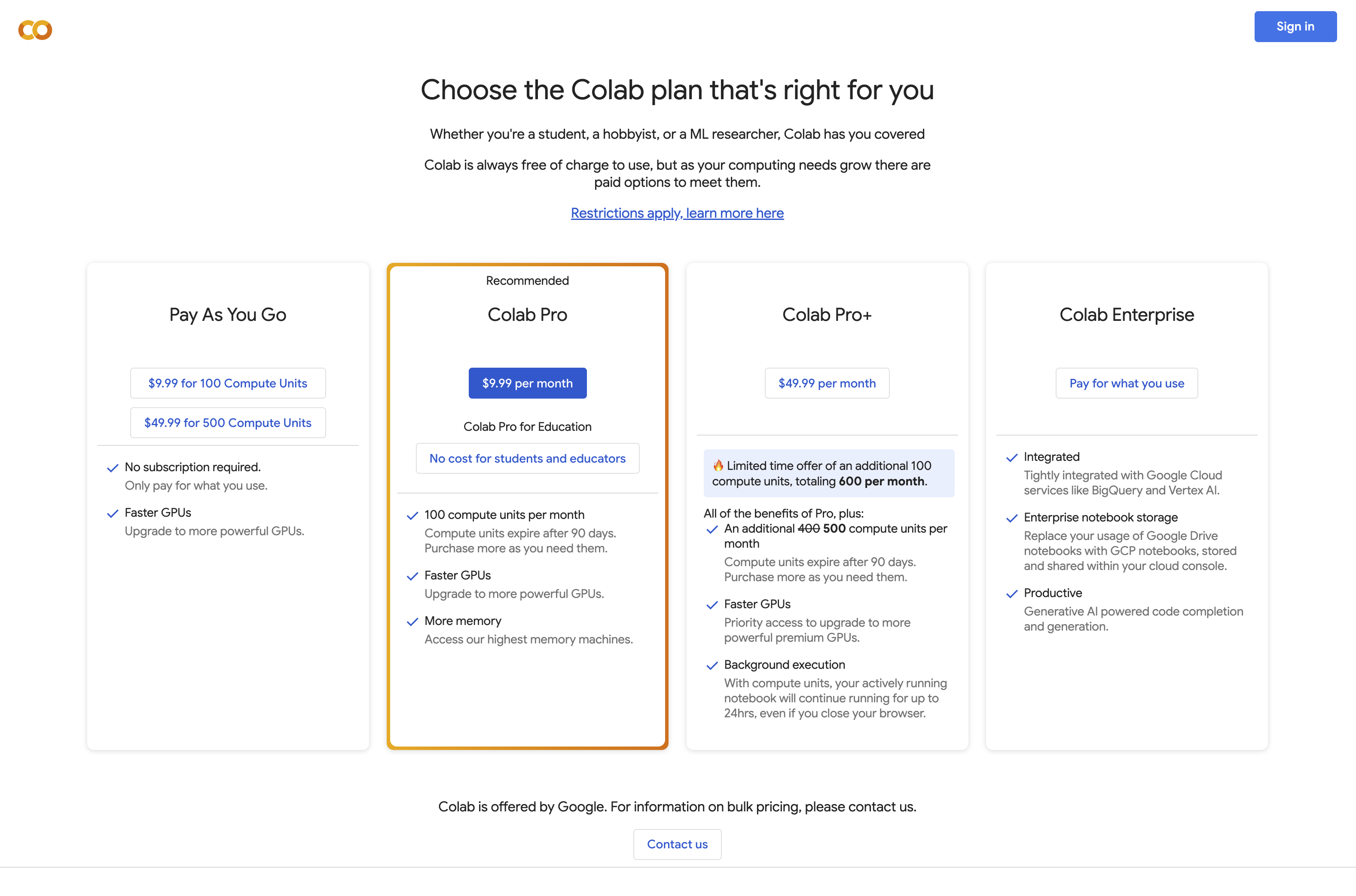
Source: https://colab.research.google.com/signup
Demo: GPT-2
Instruction-Tuned Models
- Supervised Fine-Tuning
- Large datasets of questions/answers, tasks/completions, demonstrating helpful assistant behavior
- RLHF (Reinforcement Learning from Human Feedback)
- Human raters rank different model responses, training a reward model
- Chat Templates
- Structured formats to distinguish speakers in a dialog: Typically system, user, and assistant
A Brief History of Transformer Models
timeline
    2021 : InstructGPT Development
          : Built on GPT-3 with RLHF fine-tuning
          : Trained to follow instructions and understand user intent
          : Key innovation enabling ChatGPT

    Jan 2021 : Anthropic Founded
             : Founded by Dario & Daniela Amodei with ~7 senior OpenAI employees
            : Dario led GPT-2/3 development and co-invented RLHF

    Nov 2022 : ChatGPT Launch
                  : Built on GPT-3.5 using RLHF
                  : 1M+ users in 5 days
                  : Sparked widespread interest in generative AI

    Feb 2023 : Llama 1 Released
                  : Meta's LLaMA (7B, 13B, 33B, 65B parameters)
                  : 13B model exceeded GPT-3 (175B) on most benchmarks
                  : Limited researcher access
                  : Text completion only (Alpaca fine-tune added instructions)

    Jul 2023 : Llama 2 Released
              : Available in 7B, 13B, 70B sizes
              : Trained on 40% more data than Llama 1
              : First open-weights Llama for commercial use
Closed vs. Open Models
- Closed Source: Hosted models; no ability to inspect the weights of the models. Accessed via an API (or UI).
- Examples: OpenAI GPT-5, Claude Sonnet 4.5
- Open Weight: Model files with pretrained weights, but no training data. Host on your own hardware.
- Examples: Meta’s Llama (and derivatives), Gemma
- Open Source: Models with access to the training data set. Create from scratch.
- Examples: OLMo from AI2
Calling Models via APIs
Calling Models via APIs
- HTTP-based APIs
- Client makes HTTP API calls to invoke/access the model
- (Normally use an SDK to wrap the HTTP API calls)
- Client passes Authorization token as part of the call
- Default way of accessing OpenAI, Claude, other large, closed-source models
Demo: OpenAI SDK/API call
OpenAI’s Chat Completions API
- Debuted in March 2023, together with the ChatGPT API
- Structure
- Messages array (system, assistant, user)
- Streaming support (using SSE - Server Side Events)
- Function calling (added mid-2023)
- Structured output (added Aug 2024)
- Widespread Adoption
- Anthropic, Azure, TogetherAI
- Local hosting: vLLM, LM Studio
OpenAI’s Chat Completions API
How do we consume different models from multiple providers?
- Introducing OpenRouter (https://openrouter.ai)
- A unified API to hundreds of AI models through a single endpoint
- (Using OpenAI’s Chat Completion API)
- OpenAI, Claude, Gemini, Grok, Nova, Llama, DeepSeek, Qwen, and many others.
- Pay per API call, often same cost as the provider
Demo: OpenRouter
Downloading and Running Models
Downloading and Running Models
- So far, we’ve called hosted models via APIs
- How about downloading and running models on your own hardware?
- (Obviously they need to be open-weight models)
Downloading and Running Models
Why would you want to do this?
- Offline access to models (no Internet required)
- Potential cost savings (if many API calls and already own hardware)
- e.g., running a small model embedded within a game
- Want to fine-tune your own model and have the hardware to do it
- Don’t want others to see the conversations you are having :)
Introducing Hugging Face
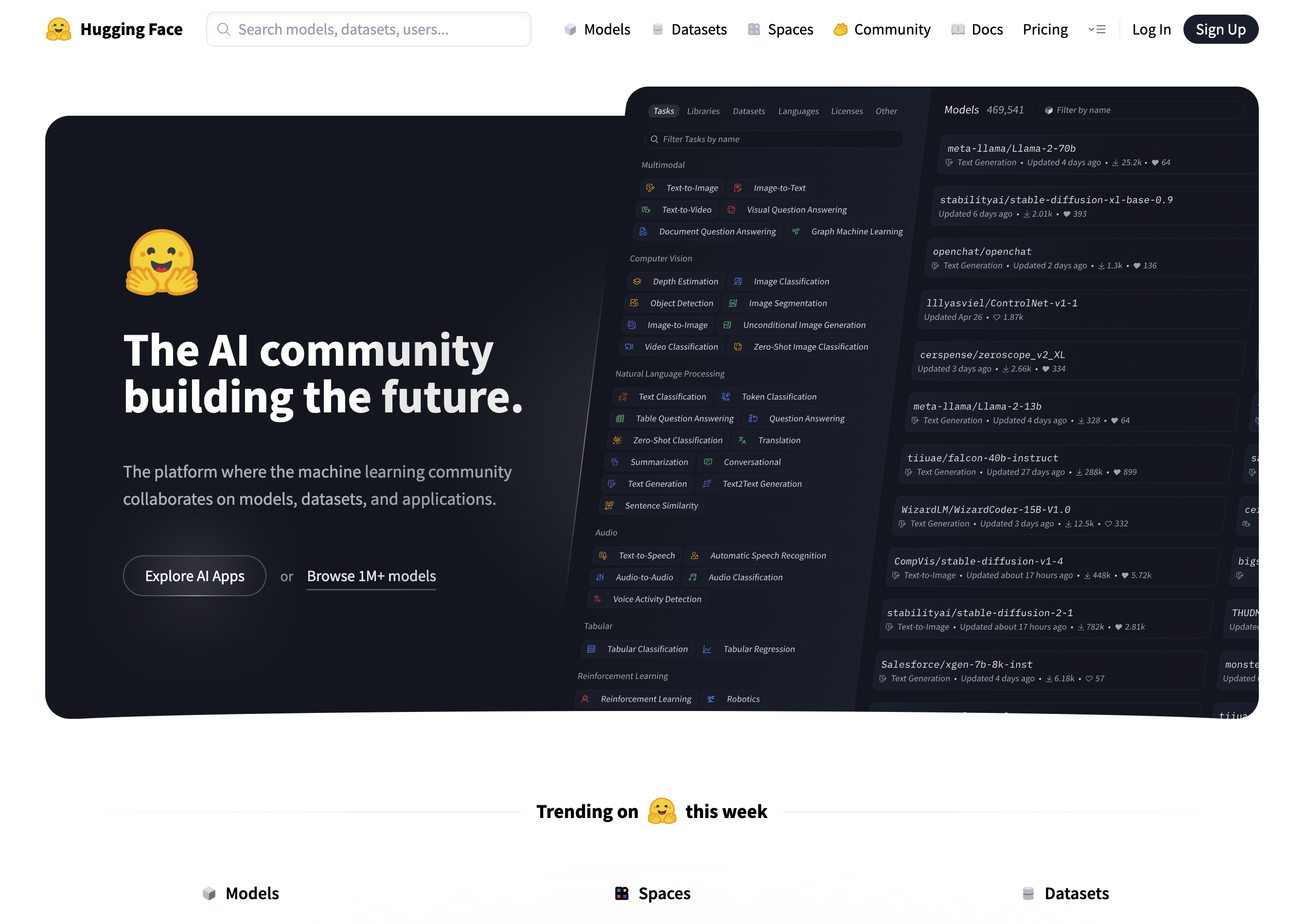
Source: https://huggingface.co
What is Hugging Face?
It is to AI models what GitHub is to source code
- Explore, download models to run on local hardware
- Upload and share your own trained/fine-tuned models and datasets
- Create “Spaces” - web-based apps for accessing models
Demo: Exploring a Model
Hugging Face Transformers
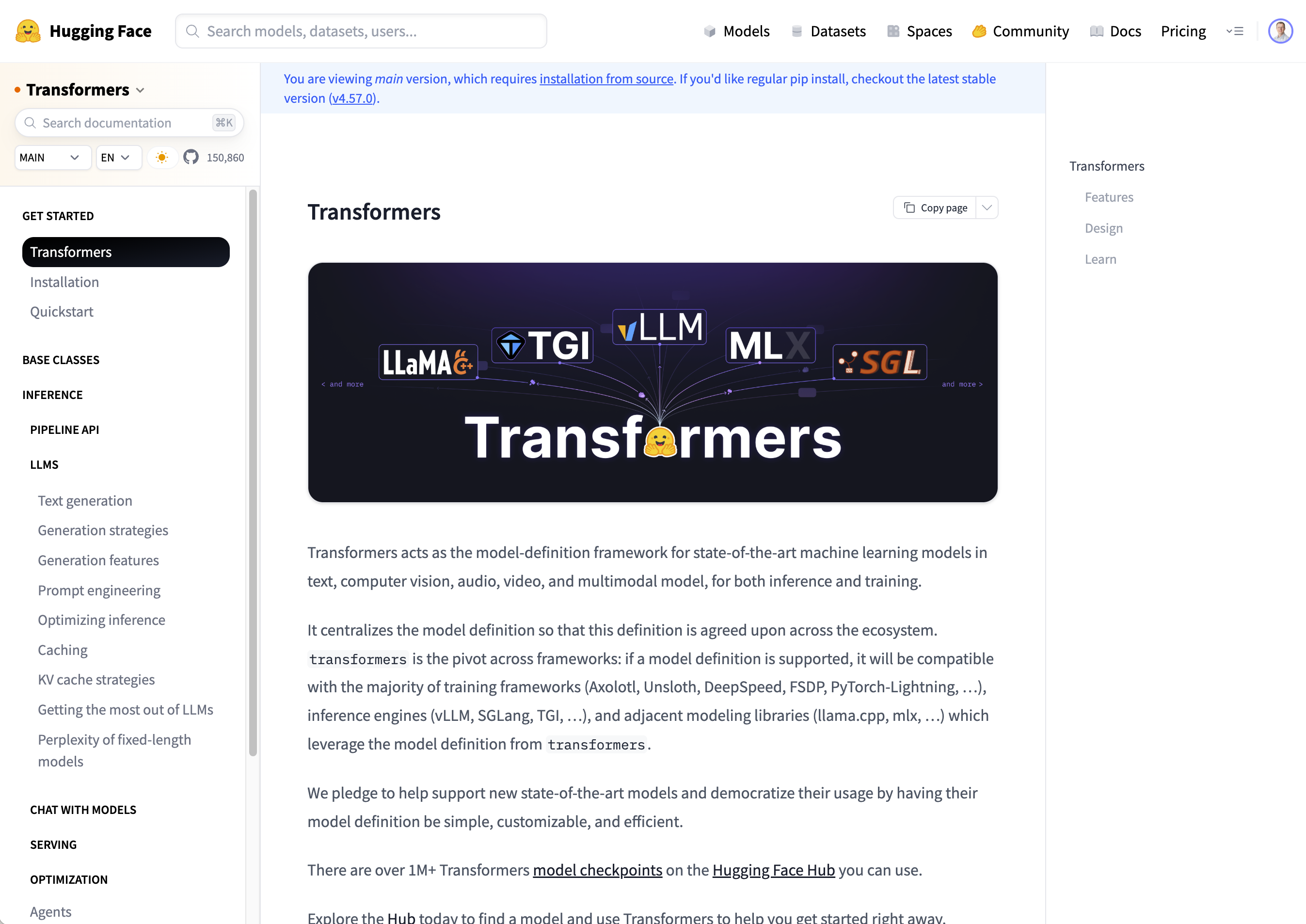
Source: https://huggingface.co/docs/transformers
Hugging Face Transformers
What is the Hugging Face Transformers Library?
- Open-source Python library to provide easy access to using various types of pre-trained transformer models
- Brings together all of the different formats under one interface
- Different models, vendors, types, chat templates
- Different implementations: PyTorch, TensorFlow, JAX
- A few lines of code to download and run the model
Demo: Using HF Transformers to download and use Gemma 3 1B
“Out of VRAM”
One challenge of running models on your own hardware is VRAM
- Roughly speaking, the size of the model will determine how much VRAM you need
- Gemma 3 models
- gemma-3-1b-it = 2Gb
- gemma-3-4b-it = 8.6Gb
- gemma-3-12b-it = 23.37Gb
- Qwen3-VL-235B-A22B-Thinking = ~475Gb
“Out of VRAM”
- Google Colab Tiers
- Colab Free T4 = 16Gb VRAM (15Gb usable)
- Colab Pro V100 = 16Gb VRAM
- Colab Pro A100 = 40Gb VRAM
- Your Gaming PC
- Probably 8Gb VRAM
- Your Phone
- V-what? :)
“Out of VRAM”
You can select smaller models, but they are less accurate / more prone to hallucination.
- How do we fix this?
- Quantization
Quantization
Process of reducing the precision of a model’s weights and activations. For example, 16-bit numbers to 4-bit.
- Parameter count matters more than precision
- A 70B parameter model at 4-bit often beats a 13B model at b16
- The models knowledge remains largely intact
- Often the extra precision doesn’t meaningfully improve outputs
Quantization Formats
The llama.cpp project (implementing LLMs in pure C/C++) has driven advancements in quantization
- GGUF (GPT-Generated Unified Format)
- Single file architecture
- Model format supporting multiple quantization levels (2-bit through 8-bit) with CPU and GPU handoff
- MLX (Apple’s ML framework and format for Apple Silicon)
- Debuted in late 2023
- Supports 4 and 8 bit quantization schemes
Running Quantized Models
- Tools built upon llama.cpp
- Ollama, LM Studio, koboldcpp
Demo: Running Gemma 3 27B GGUF on my laptop
LMStudio: gemma-3-27b-it-qat-q4_0-gguf
Demo: C# Client <-> Gemma 3 27B Local
demos/01/lmstudio-client/LMStudioClient.csproj
Hosting Models in Unity
- Download the GGUF model locally to Assets/StreamingAssets folder
- Use llama.cpp bindings for C# to host
- LLAMASharp: https://github.com/SciSharp/LLamaSharp
- Use OpenAI SDK (or similar) as client
- Unity Demo
- https://github.com/eublefar/LLAMASharpUnityDemo
Resources
Resources
- This slide deck, resources, links, notebooks, everything:
- https://simonguest.github.io/CSP
- (I’ll also post to the GAM-400 and CSP-300/400 channels)
Q&A
Bibliography
Vaswani, Ashish, Noam Shazeer, Niki Parmar, et al. 2017. “Attention Is All You Need.” Advances in Neural Information Processing Systems 30.